
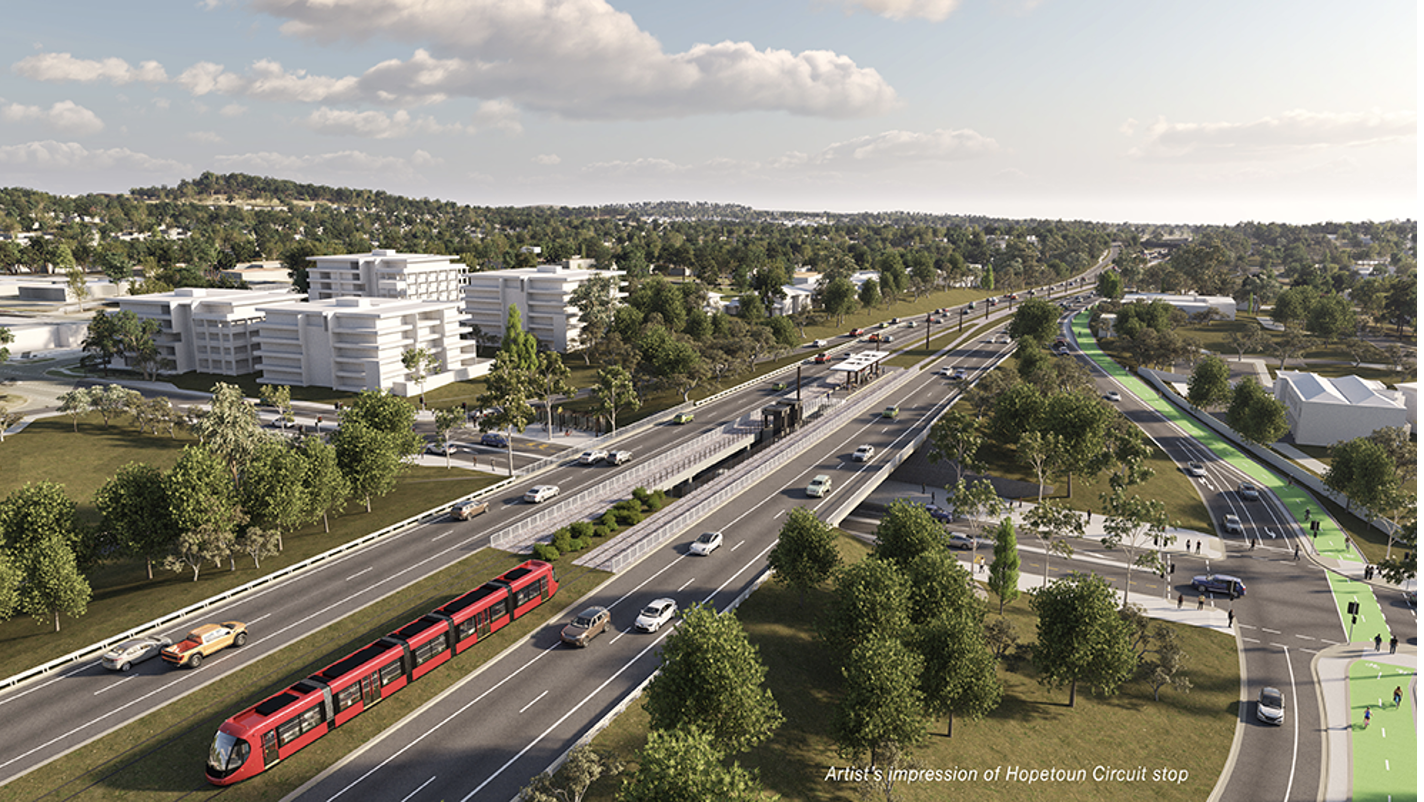

In a rapidly evolving world, cities need infrastructure that not only meets the demands of today but anticipates the needs of tomorrow. The Light Rail Stage 2B: Commonwealth Park to Woden project in Canberra exemplifies this forward-thinking approach, thanks to the innovative efforts of AECOM and Place Intelligence. Hayden Rosser, a landscape architect at AECOM and a key figure in the Light Rail Stage 2B project, recently shed light on how data-driven design and planning are being harnessed to create better place outcomes for Canberra, ensuring long-term community benefits.
A Holistic Vision for Urban Systems
The Light Rail Stage 2B project is far more than a simple transportation solution – it’s an urban design initiative that seeks to enhance the overall quality of life for Canberra’s residents.
“We know that light rail projects and infrastructure projects aren’t engineering projects; they’re urban systems projects,” Rosser explains.
This perspective has guided AECOM’s approach, ensuring that the light rail integrates seamlessly into Canberra’s unique landscape and urban fabric, honouring the city’s legacy as a garden city while preparing it for future growth.
Data-Driven Innovation with Place Intelligence
One of the key aspects of the Stage 2B project is its use of big data to inform decision-making. AECOM has partnered with Place Intelligence to leverage advanced data analytics, demystifying urban legends and uncovering the real behaviours and needs of Canberra’s residents. For example, Rosser discussed how the data from the first stage of Canberra’s light rail revealed that the average walking distance to certain stops is as much as 910 metres.
“Having access to real data allows us to plan more effectively and create a system that truly serves the community,” Rosser notes.
This commitment to using data for design is central to the project’s success. By understanding where people are coming from, how they move through the city, and what their actual needs are, AECOM can design infrastructure that is both efficient and deeply connected to the community’s needs.
“The big data almost gives you this unbiased view… it removes the loudest person in the room, giving every voice equal weight in the data,” Rosser explains. This approach ensures that the design is not swayed by anecdotal evidence but is instead grounded in comprehensive, real-world insights.
Creating Long-Term Community Benefits
AECOM’s focus on data-driven design is not just about optimising the light rail’s functionality; it’s about ensuring long-term benefits for the community. Rosser highlights how the project is designed with the future in mind, looking ahead to 2041 and beyond.
“We’re constantly looking forward,” he says, “When we re-design intersections, stops and services, we’re thinking about what it’s going to look like in the future. This forward-thinking design approach ensures that the infrastructure we build today will serve the city well into the future.”
This long-term perspective is also evident in how AECOM is planning for the ongoing operation and maintenance of the light rail. Rosser explains that the project is seen as a 100-year endeavour, with the design phase being just a small part of its life cycle. “The most important factor is understanding what it’s going to do into the future and how we maintain it,” Rosser says. By integrating data from the very beginning, AECOM can make informed adjustments and improvements as the system evolves, ensuring that light rail continues to meet the needs of Canberra’s residents for generations to come.
Championing Innovation for Better Place Outcomes
The collaboration between AECOM and Place Intelligence highlights the transformative power of innovation in urban planning. By harnessing the full potential of big data, the Light Rail Stage 2B project is setting a new standard for how cities can be designed and managed. Rosser is clear that this approach is not just about building infrastructure but about creating a better quality of life for the people of Canberra, explaining that “infrastructure is really important to getting communities around. It enables all members of the community to have access to good and quality public transport systems, which is our aim,”.
The insights gained from Place Intelligence’s data are being used to create a light rail system that not only improves mobility but also enhances the overall urban experience. For example, Rosser notes how the data has revealed new patterns of behaviour that have informed the placement and design of stops, ensuring they are both efficient and user-friendly. This kind of data-driven planning is essential for creating infrastructure that is not just functional but also aligned with the needs and desires of the community.
Conclusion
The Light Rail Stage 2B project in Canberra is more than a transportation system; it’s a blueprint for how cities can leverage data and innovation to build a better future. AECOM, in partnership with Place Intelligence, is leading the way by championing a data-driven, human-centered approach to urban design. This approach ensures that the project will not only meet the needs of today’s residents but will continue to serve Canberra’s community for decades to come.
As cities around the world look for ways to improve their infrastructure, the Light Rail Stage 2B project stands out as a shining example of what can be achieved when innovation, data, and a commitment to community come together. With leaders like Hayden Rosser at the helm, AECOM is not just designing a light rail system; they are helping to shape the future of Canberra, one data-driven decision at a time.
